
ABCD - A Busy City Diet
Role
UX/UI Designer
Timeline
5 Months
Deliverables
Mobile Application
Tools
Figma, Miro
View Prototype

An AI-integrated App that locates restaurants and meals nearby busy individuals.
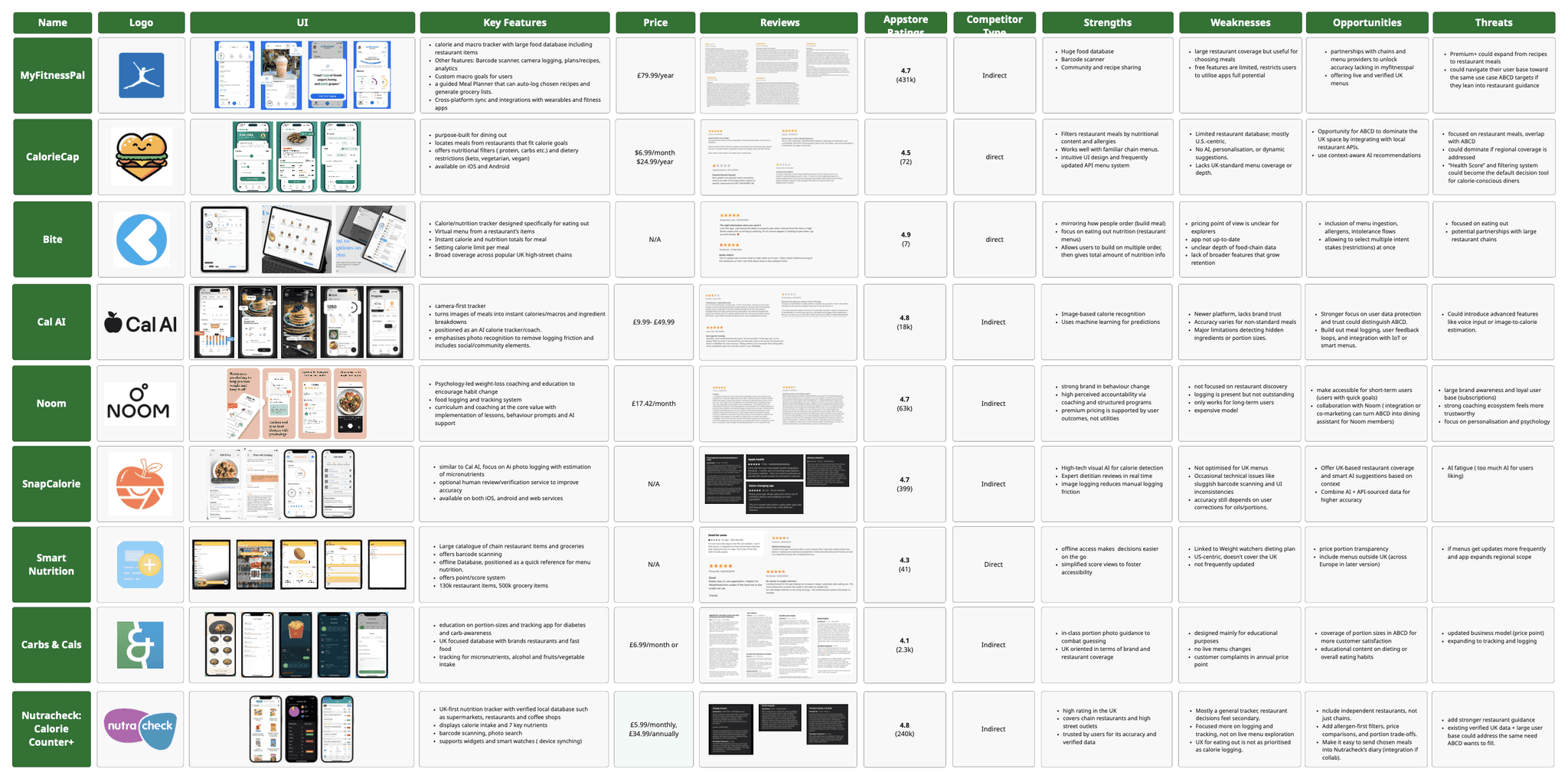
Competitor Analysis
A competitor analysis was conducted to explore how existing nutrition and fitness apps are structured and positioned in the market. The purpose of this work was to understand user expectations and identify how ABCD could align with industry standards while still offering a unique value.
Our Solution
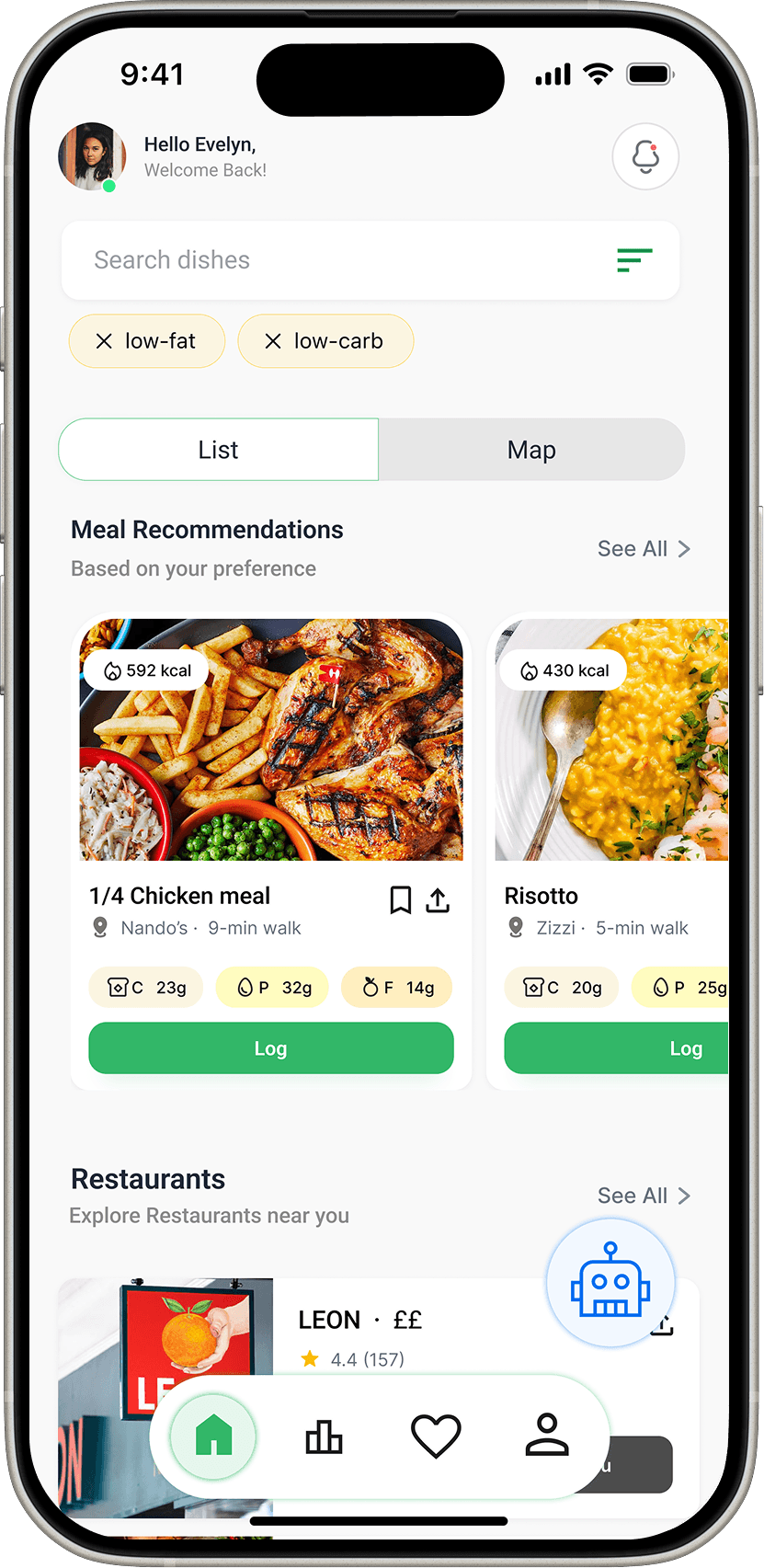
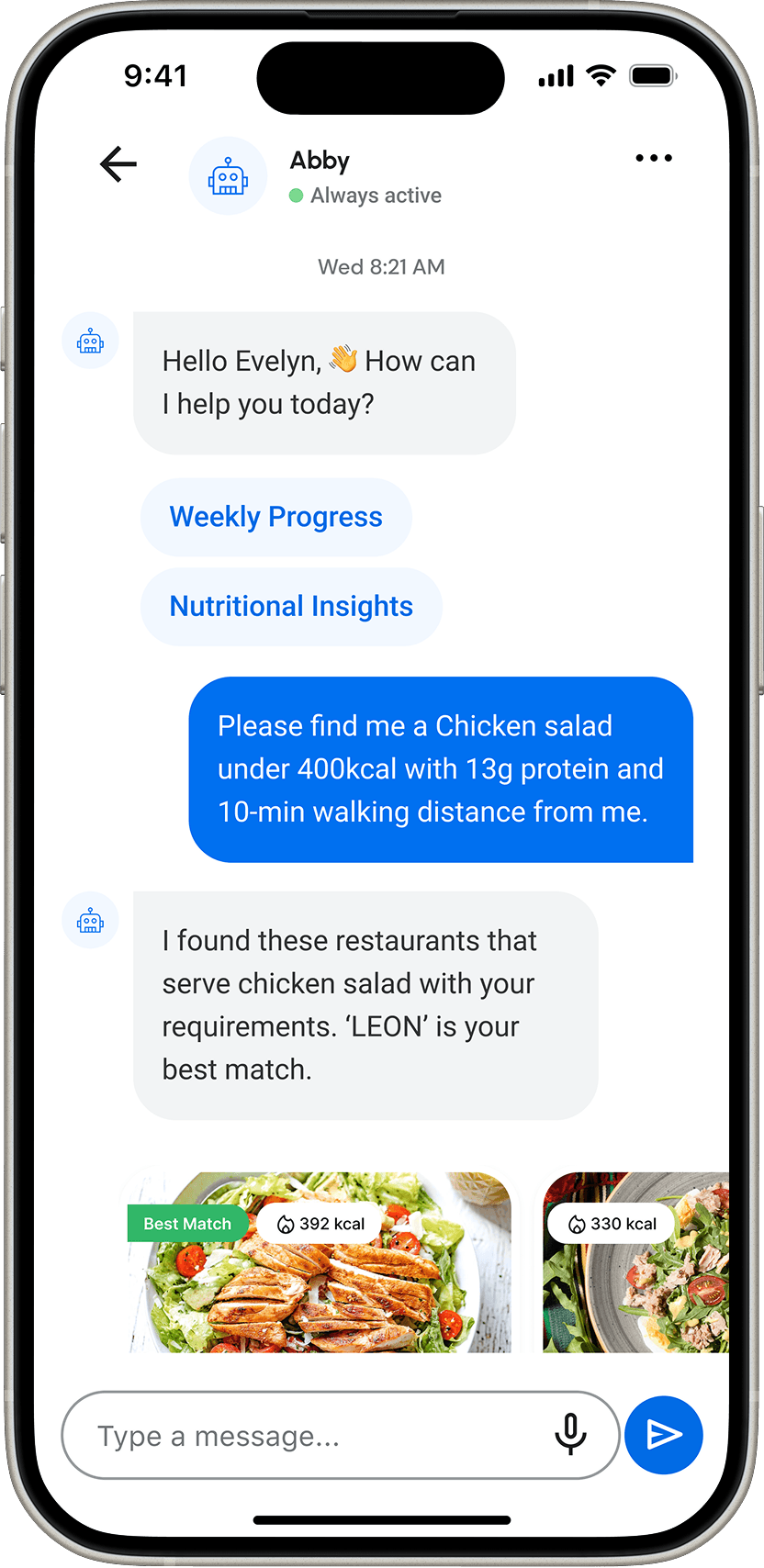
Supervised learning and Broad AI models are utilised to offer smart recommendations, personalised goals and habit-building features to assist users practice healthier eating.
An AI-integrated mobile app that implements restaurant APIs to provide real-time calorie-accurate meal suggestions for users eating out in London.
SECONDARY RESEARCH
Issues health conscious users are facing:
Users struggle to maintain and build habits that foster nutritional changes
75% of UK adults struggle
to eat well due to time,
work and lifestyle
limitations
Existing apps don’t bridge the gap between nutrition awareness and real-world dining decisions.
OVERVIEW
The Problem
Busy professionals struggle to maintain a calorie-conscious diet while eating out due to limited time, unreliable calorie data, and cognitive overload in meal decision-making.
"I think we don't actually know how many calories we consume each day."
PRIMARY RESEARCH
Understanding the users experiences
Based on the research findings I conducted 10 user interviews ranging from ages 19 to 54 and an expert interview. Research shows they work the longest hours and eat out frequently.
Fitness enthusiast, 26
"
"It's a little bit tough deciding, majorly because I want to make sure I eat healthy. I try to stay within my calorie count"
Student, 25
"
" …I'm anaemic so I need as much iron in my diet as possible. What I don't like about Apps is that they mostly only show fast food places rather than healthy food spots."
User, 33
"
Most participants engaged in meal prepping, calorie awareness, or using fitness/nutrition apps for assistance.
Eating out was common, especially at chain restaurants due to calorie transparency.
Key Insights:
Habits and Decision-making
Cognitive overload from nutrition tracking and portion sizes.
Guilt after poor food choices or inconsistency.
Limited options for cultural foods and dietary restrictions.
Distrust in AI tools due to inaccuracies.
Pain Points
Reliable nutrition databases, including cultural dishes.
Transparent calorie and nutrient information.
Personalised suggestions
Progress tracking, reminders, and gamification for motivation.
Needs and Expectations
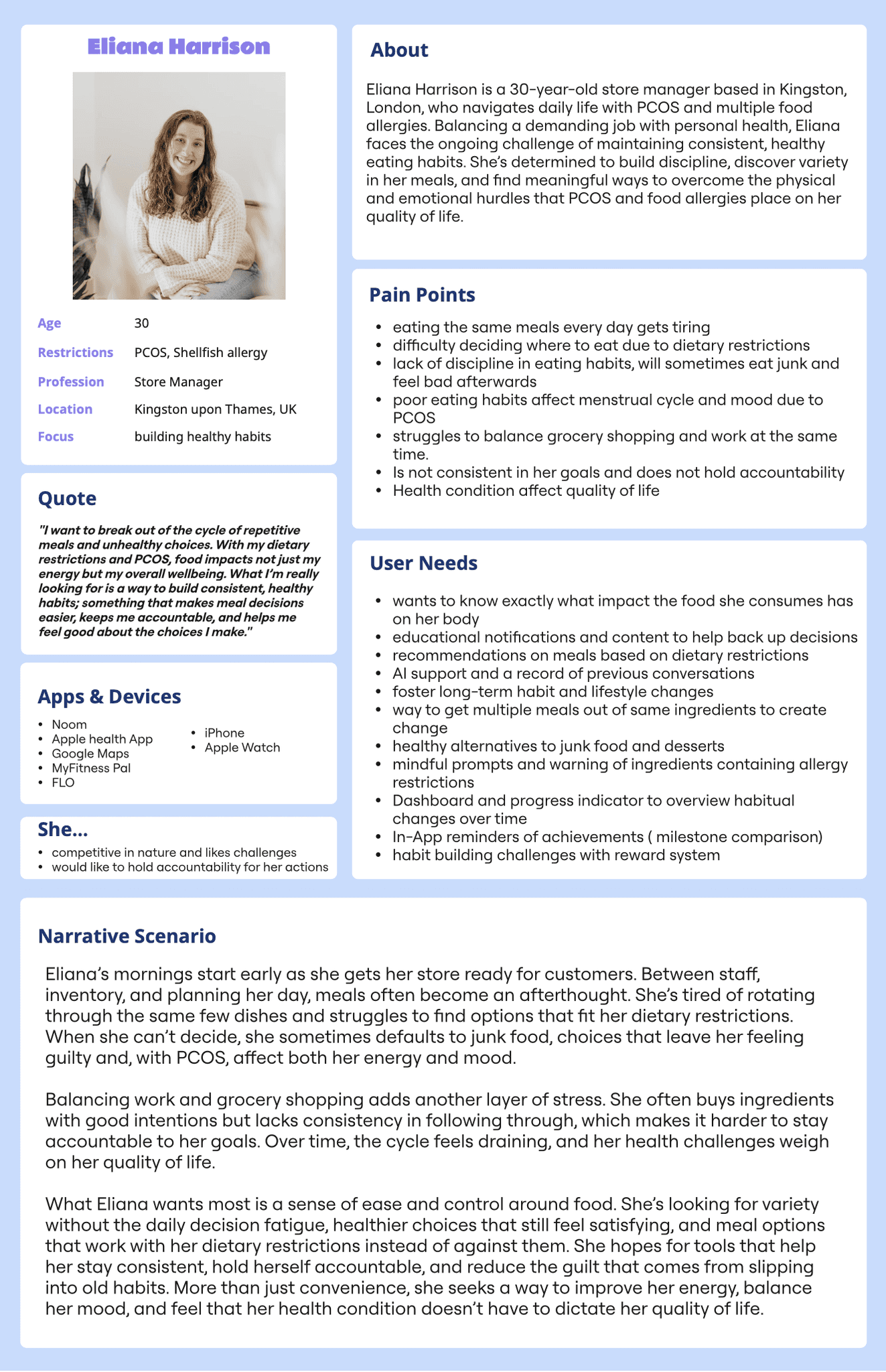
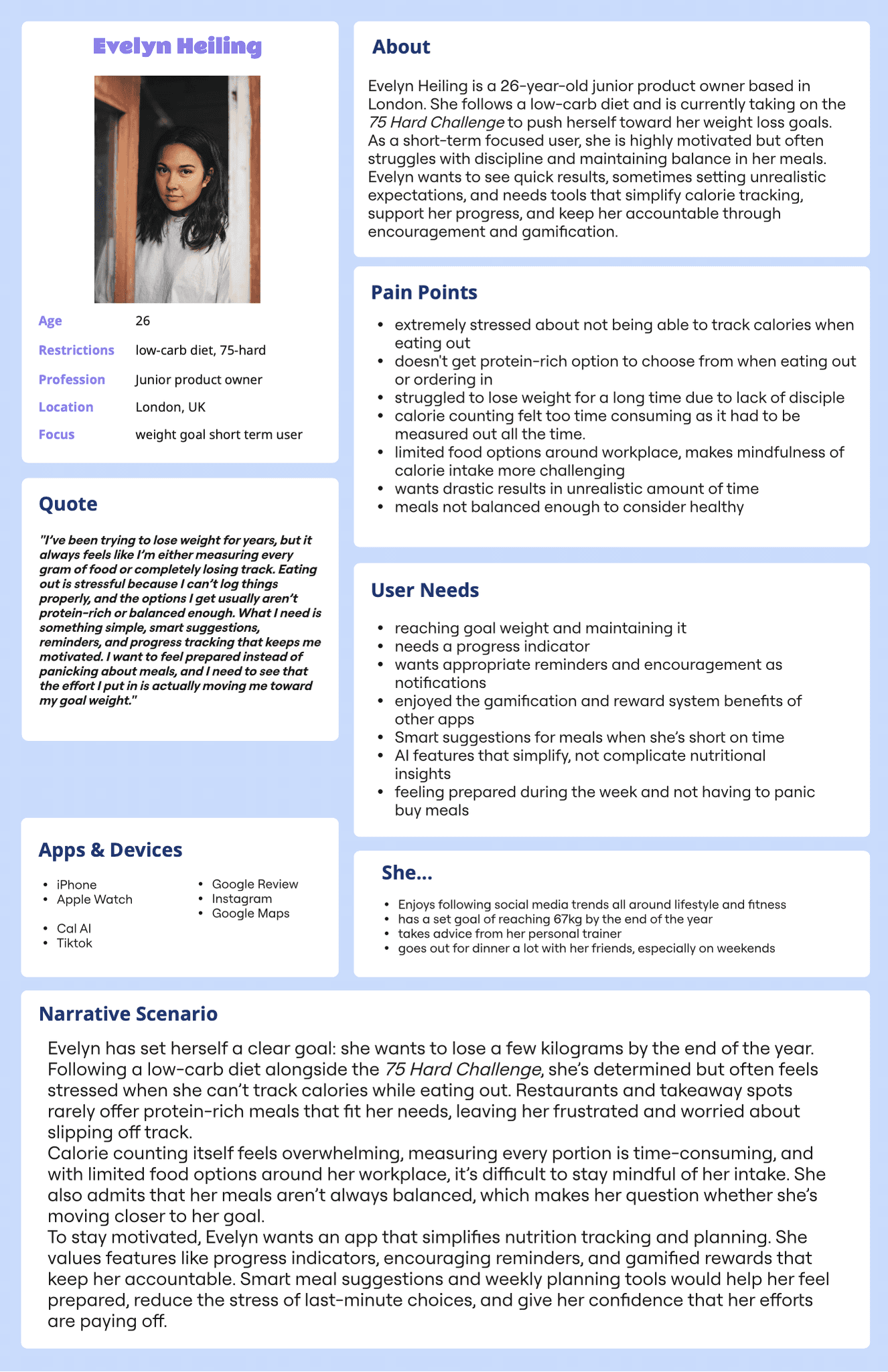
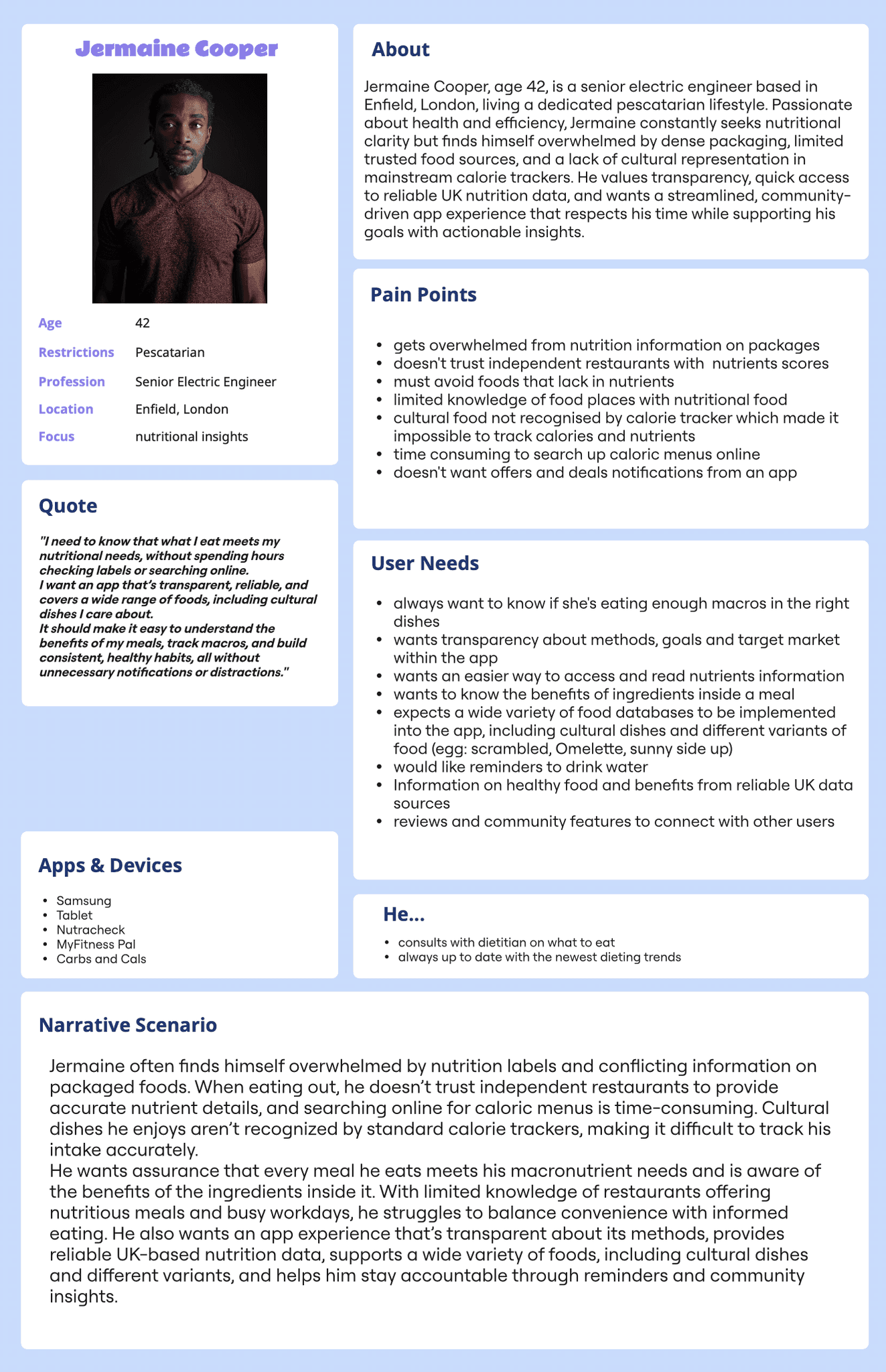
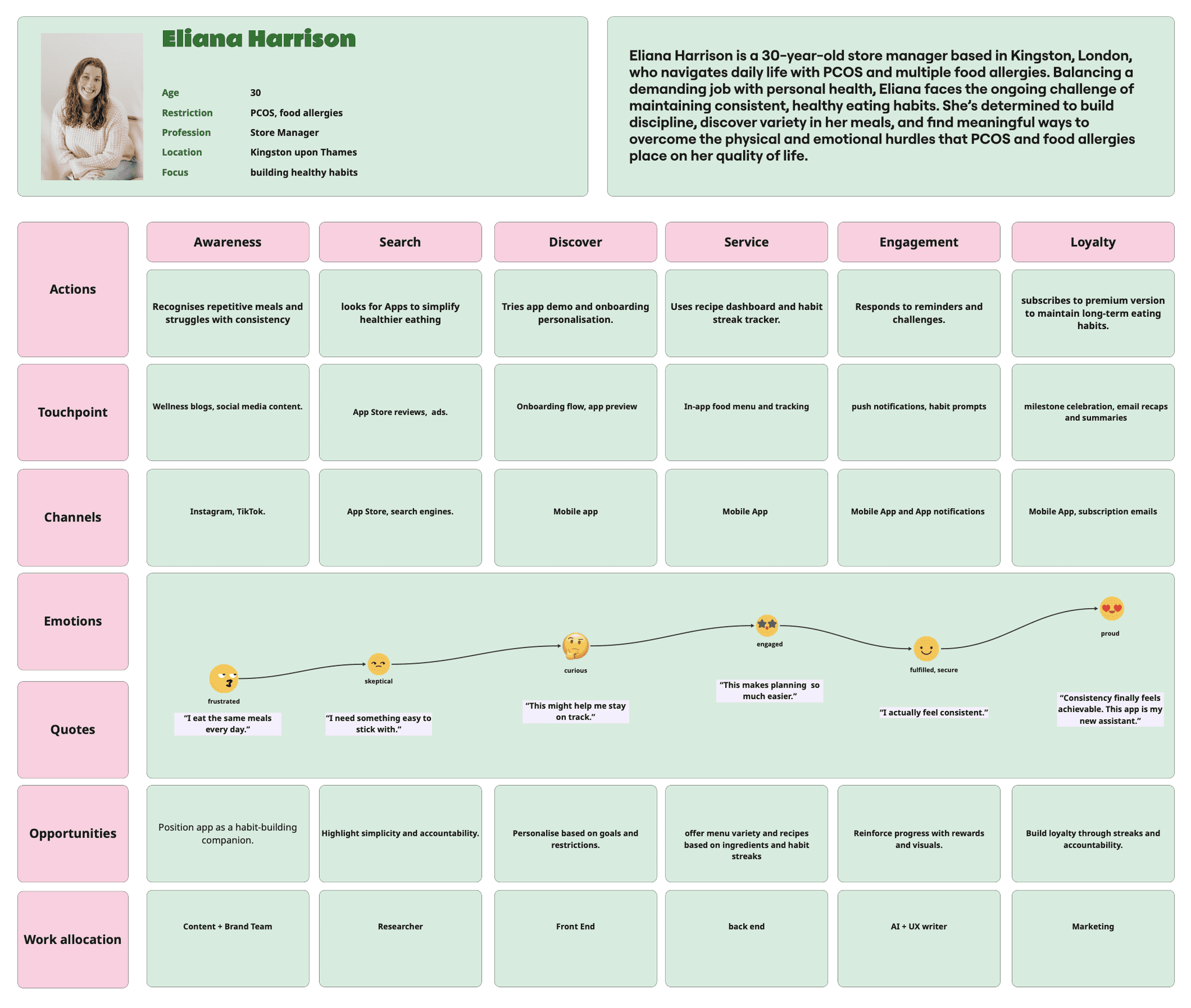
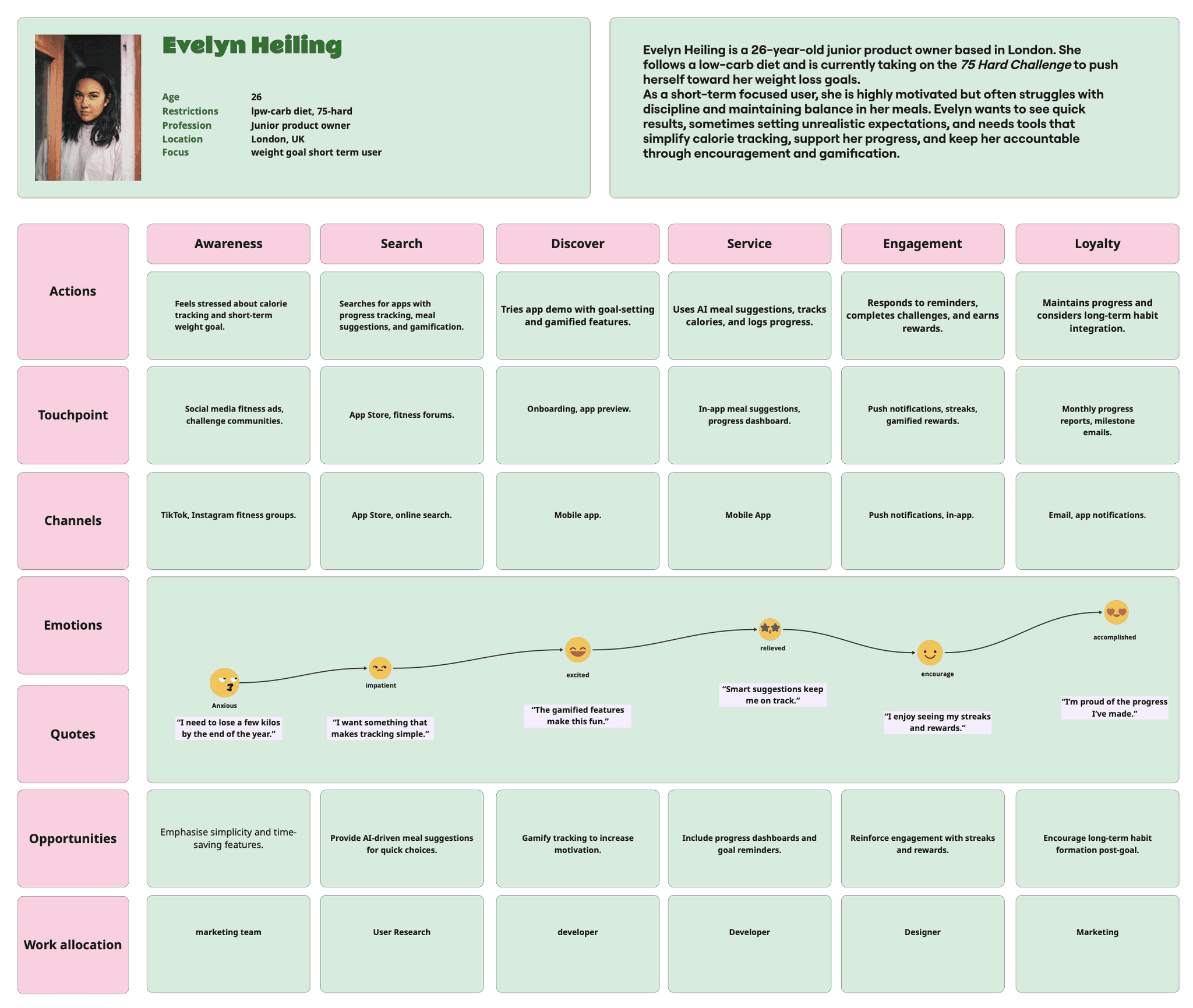
Proto-Personas & User Journey Maps
Proto-personas and User Journey Maps were developed after synthesising interview insights to represent key user types: busy, health-conscious professionals, helping align on user needs, empathise with their challenges, and prioritise features around convenience, accuracy, and trust.
METHODOLOGY
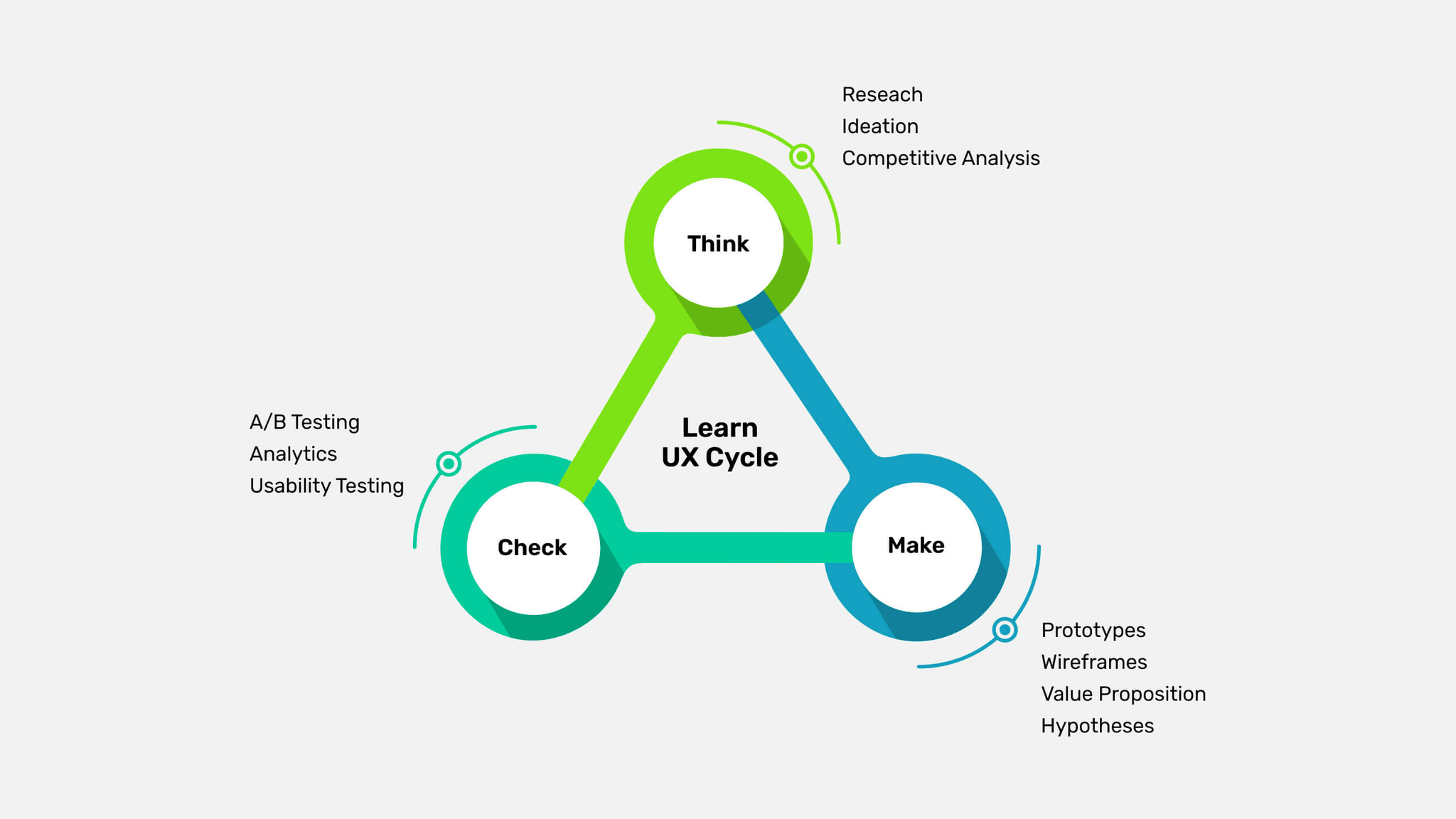
LEAN UX
The ABCD project followed the Lean UX process 'Think, Make, and Check' to enable rapid, user-driven experimentation, validate hypotheses efficiently, and iteratively refine solutions aligned with real user needs.
Assumptions
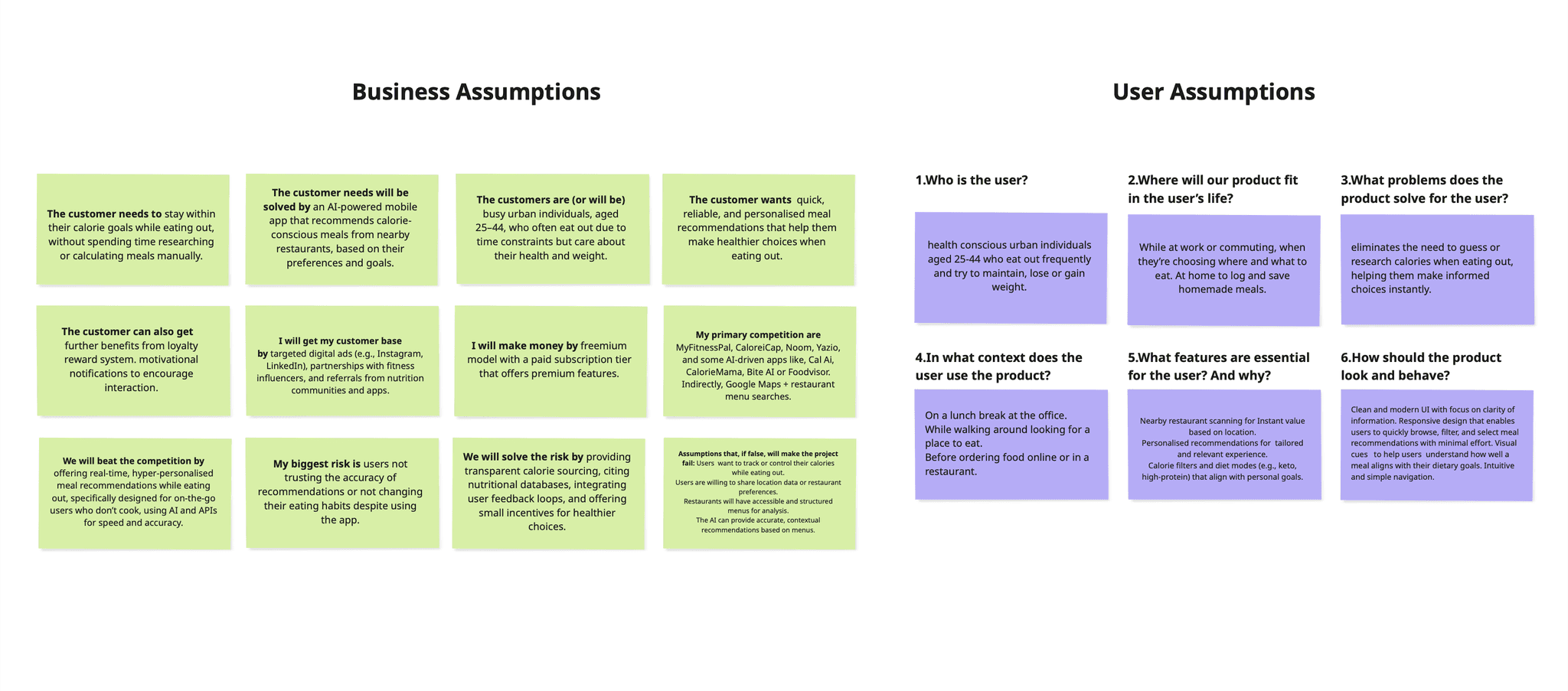
Assumptions about user and business needs were identified to guide early decision-making.
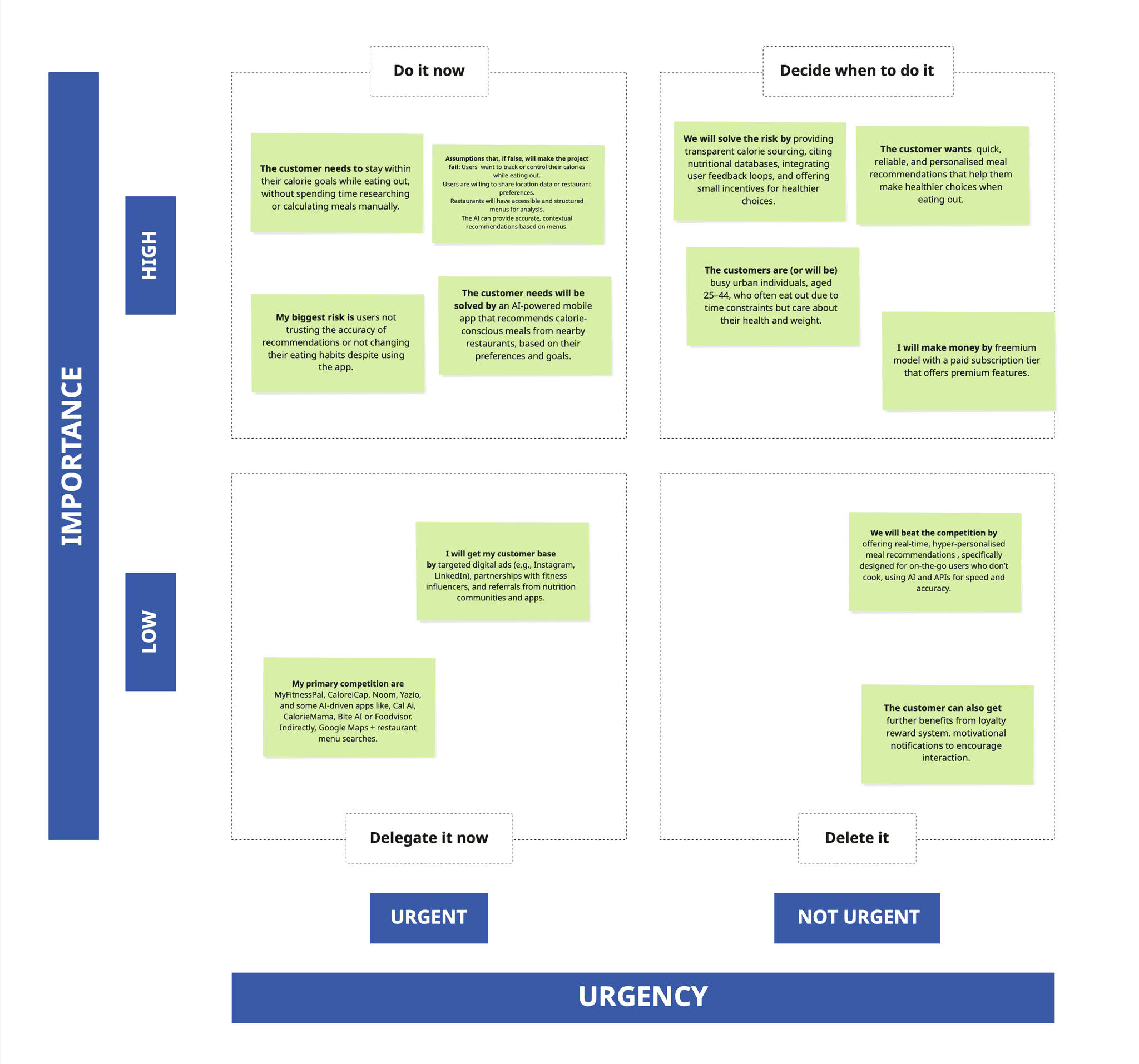
They were organised in an Eisenhower prioritisation chart to separate urgent from important assumptions, ensuring focus on what most impacts the project’s success.
Hypothesis Statements
HMW Statements
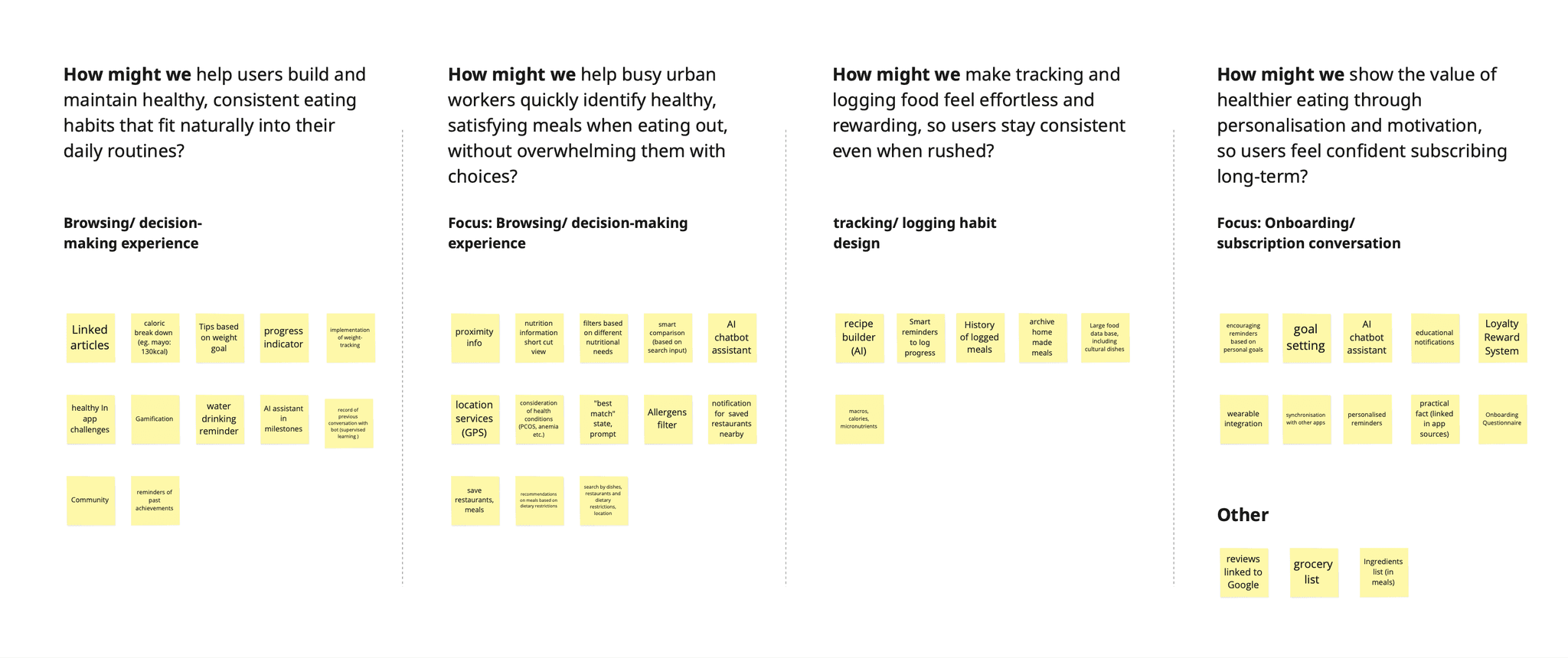
HMW statements were developed directly from user research insights to reframe problems into opportunities.
They served as the foundation for ideation by encouraging creative thinking while remaining grounded in user needs.
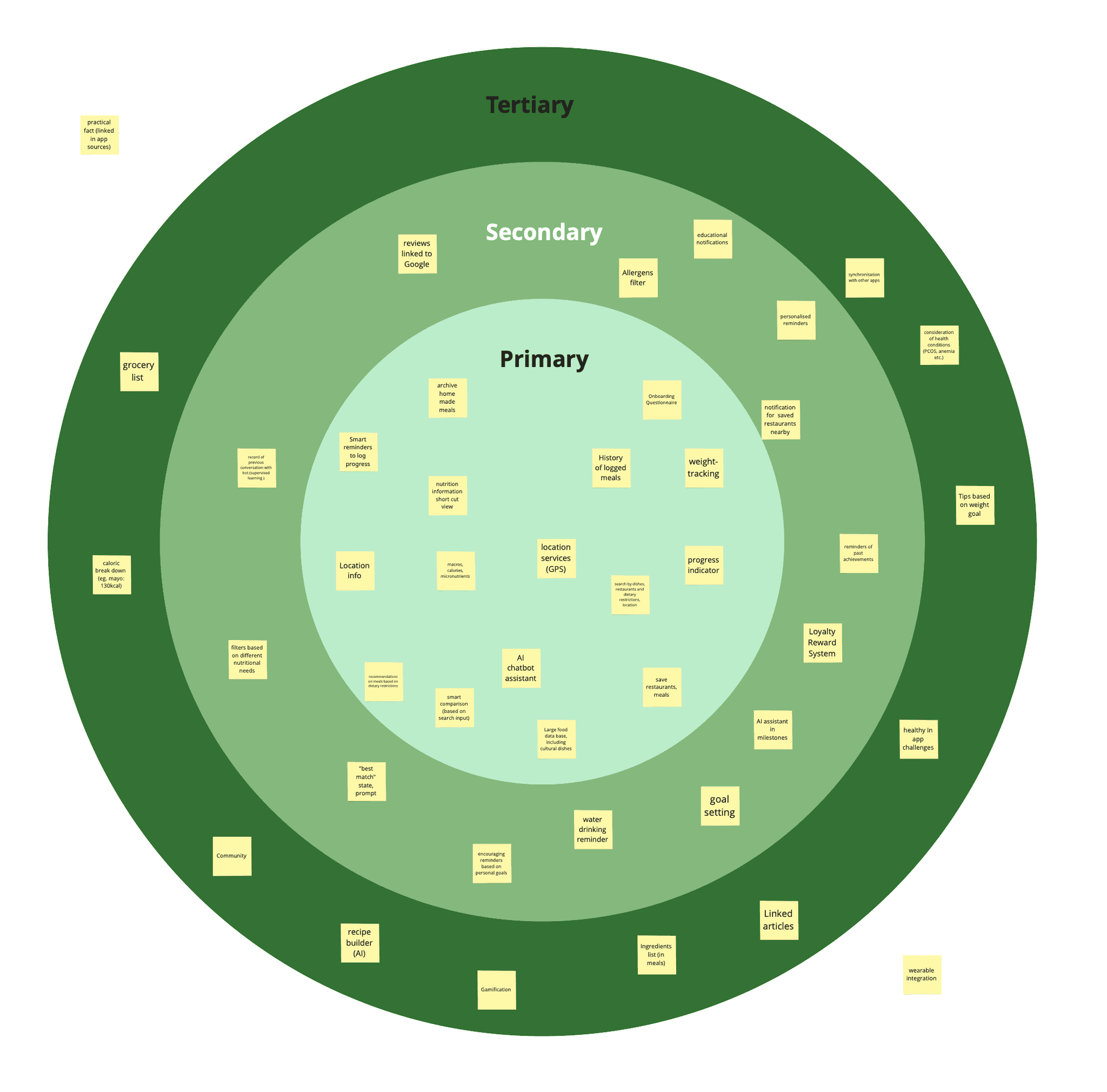
The Bull’s Eye chart was then created to prioritise the wide range of ideas generated from the HMWs.
Technology Blueprint
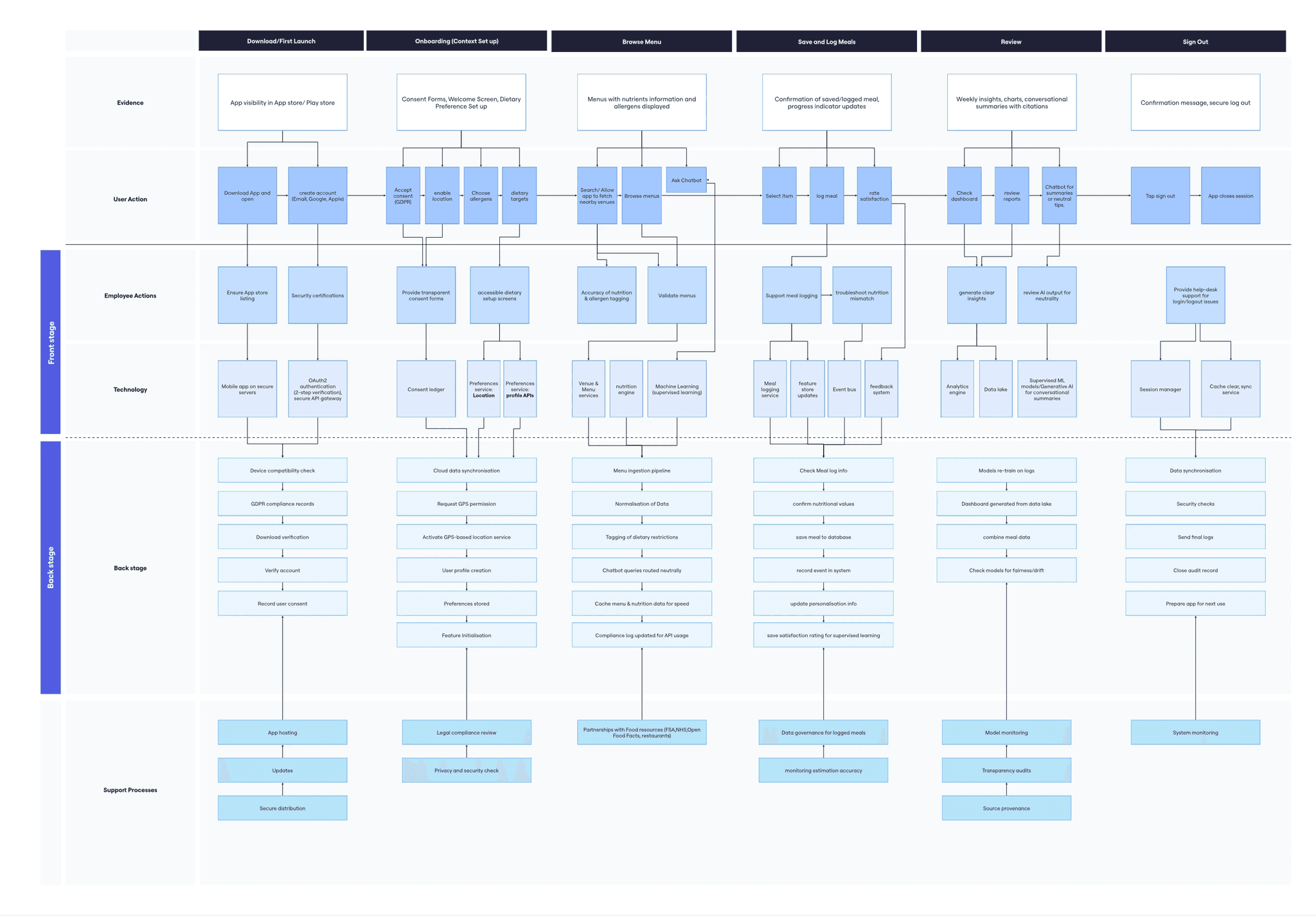
The technology blueprint illustrates how technical components support the app
across different stages of the app. AI was implemented using supervised learning to
personalise vocabulary recommendations, ensuring suggestions adapt to each
user’s skill level.
View Prototype
In Conclusion, ABCD demonstrates how AI and open APIs can be combined with UX to create an effective tool for supporting calorie-conscious eating in London.
By grounding the design in research methods, the project ensures that user needs and motivations are prioritised.
The integration of design principles and heuristic evaluation further contributes to an accessible, and reliable interface.
Synthesis
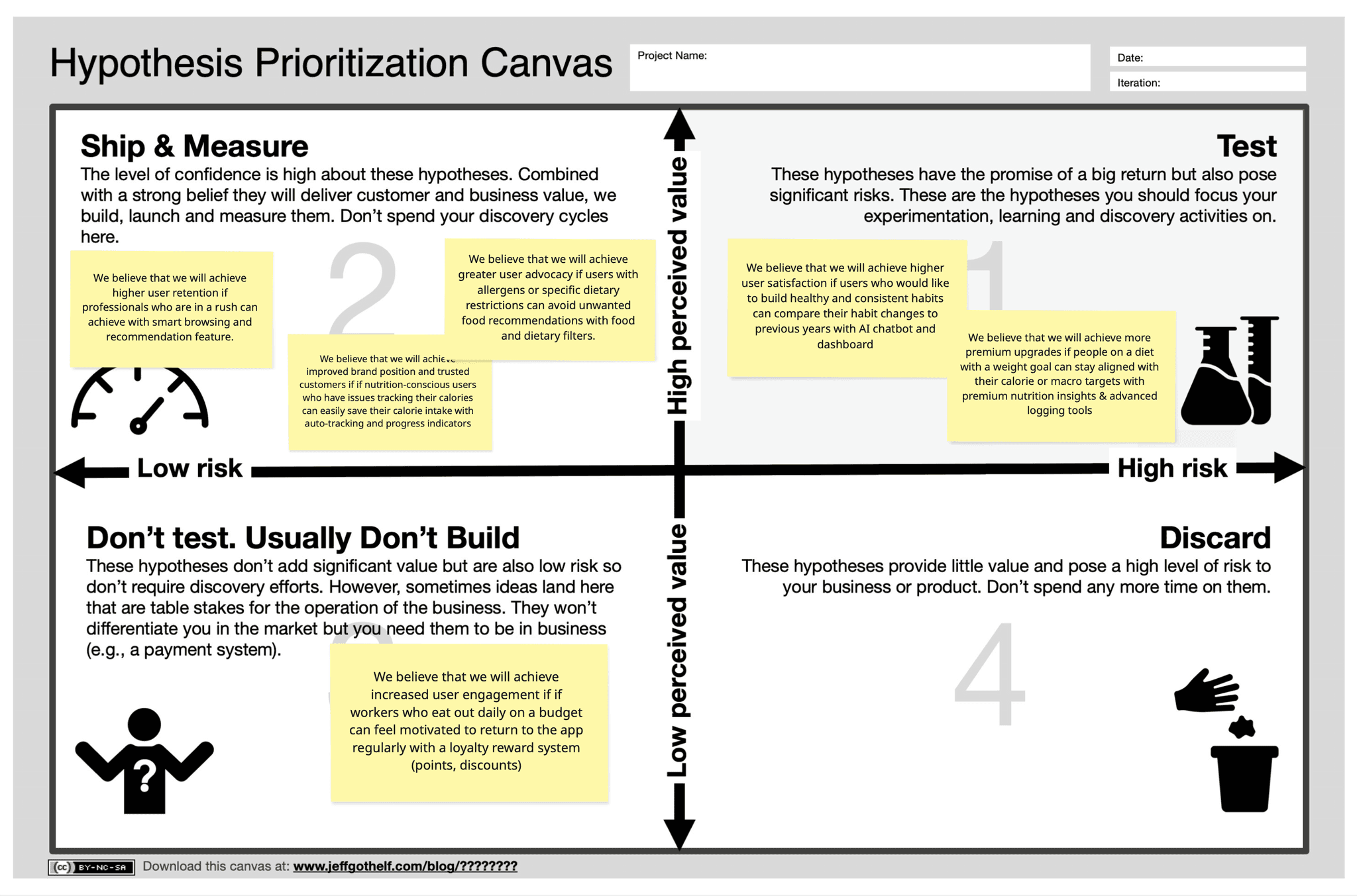
The hypothesis statements clearly define assumptions about users, problems, and potential solutions in a testable format.
They have been organised into a table
and an Eisenhower prioritisation chart to identify which hypotheses are most urgent and important to validate first.
This approach ensures that the focus is on testing the ideas that carry the highest risk
or potential impact.

MVP
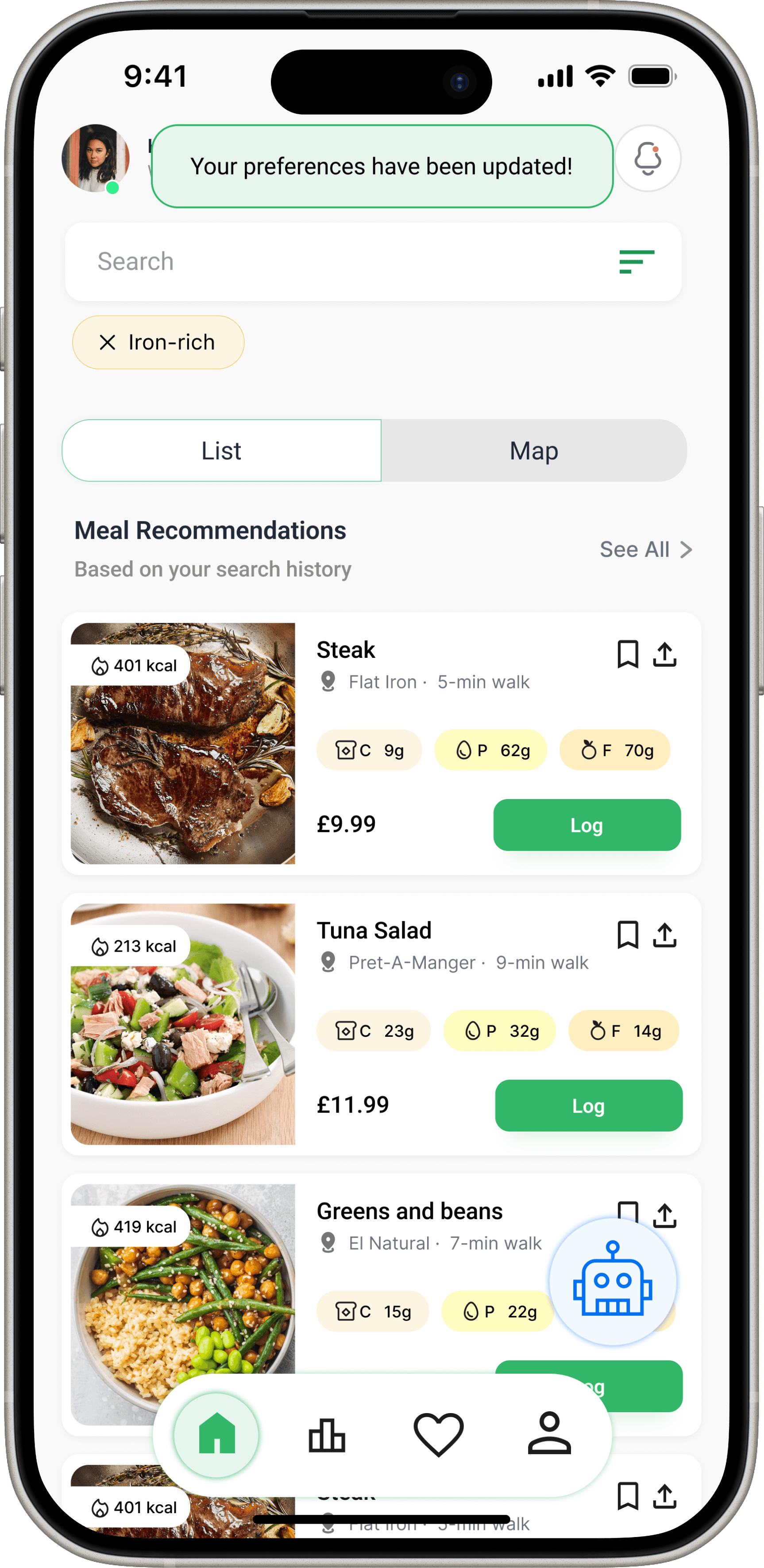
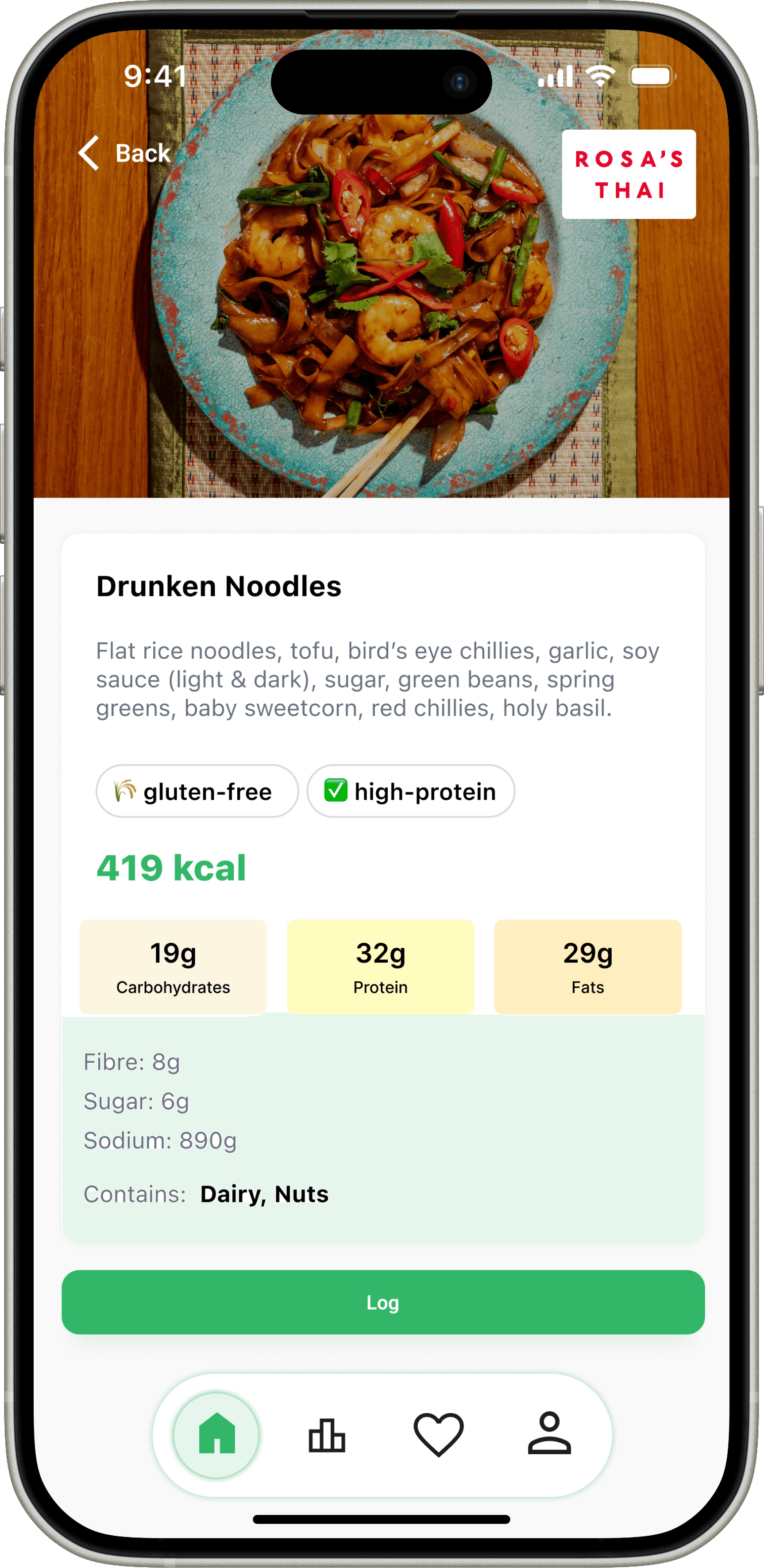
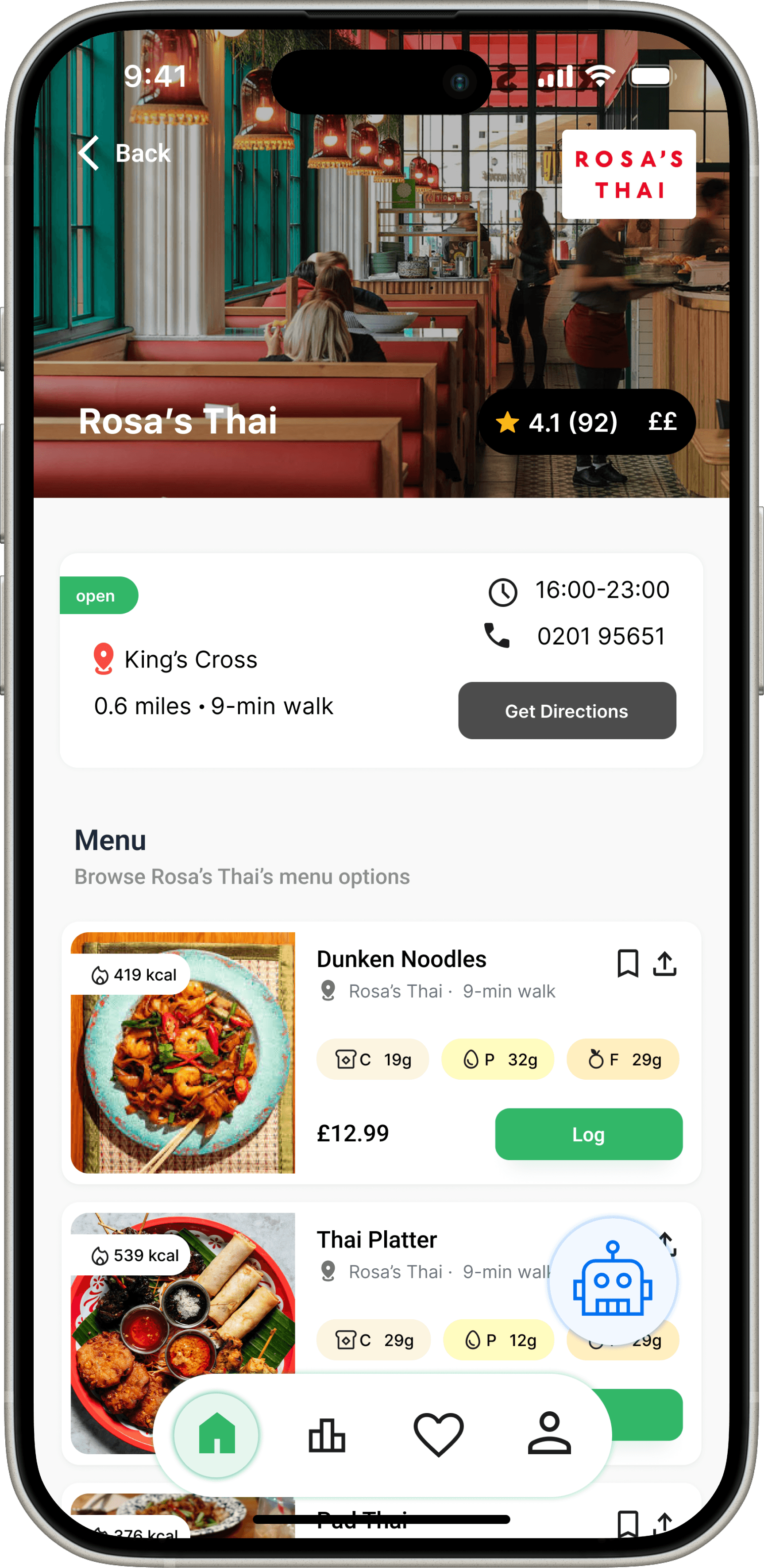
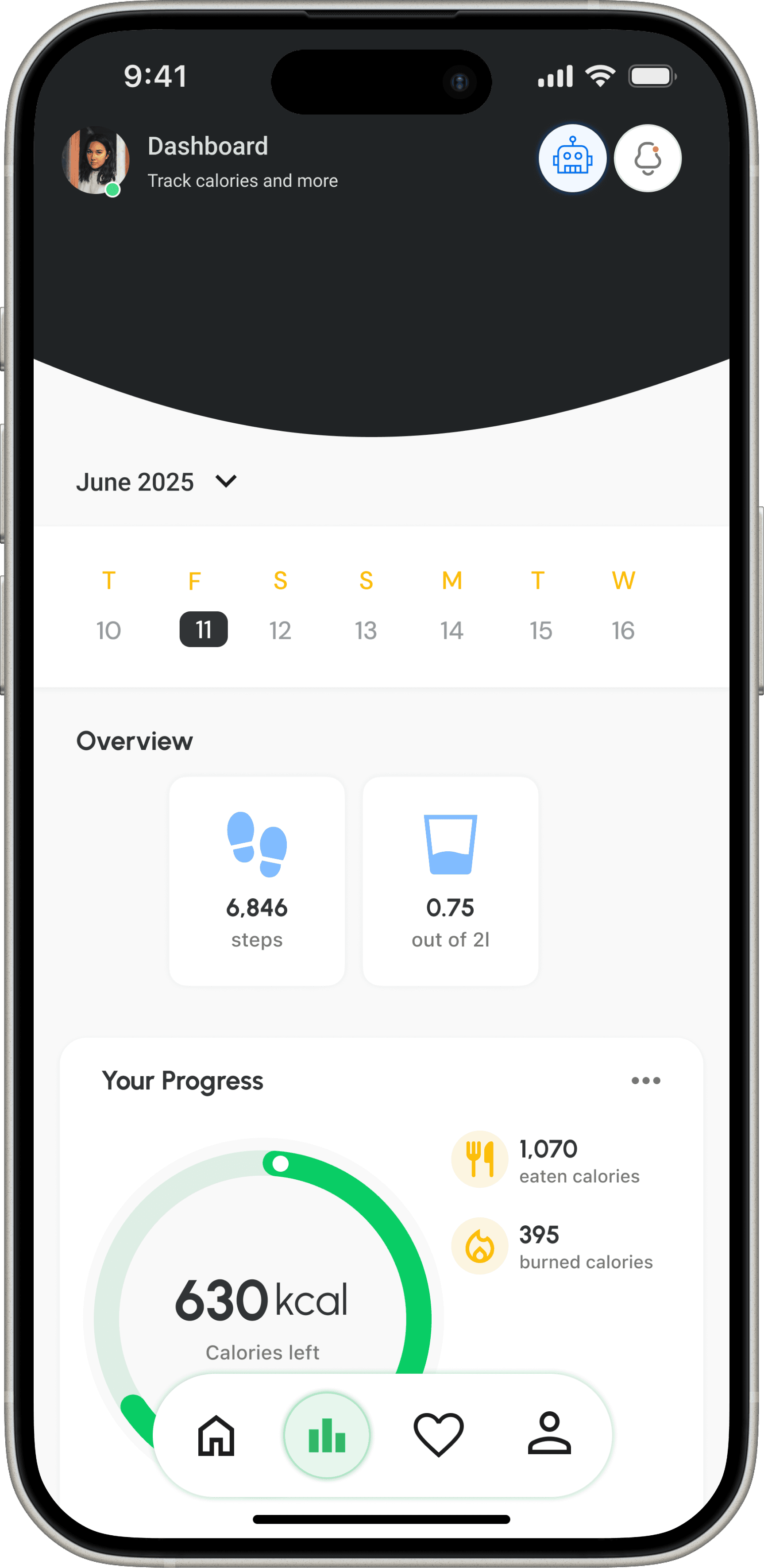
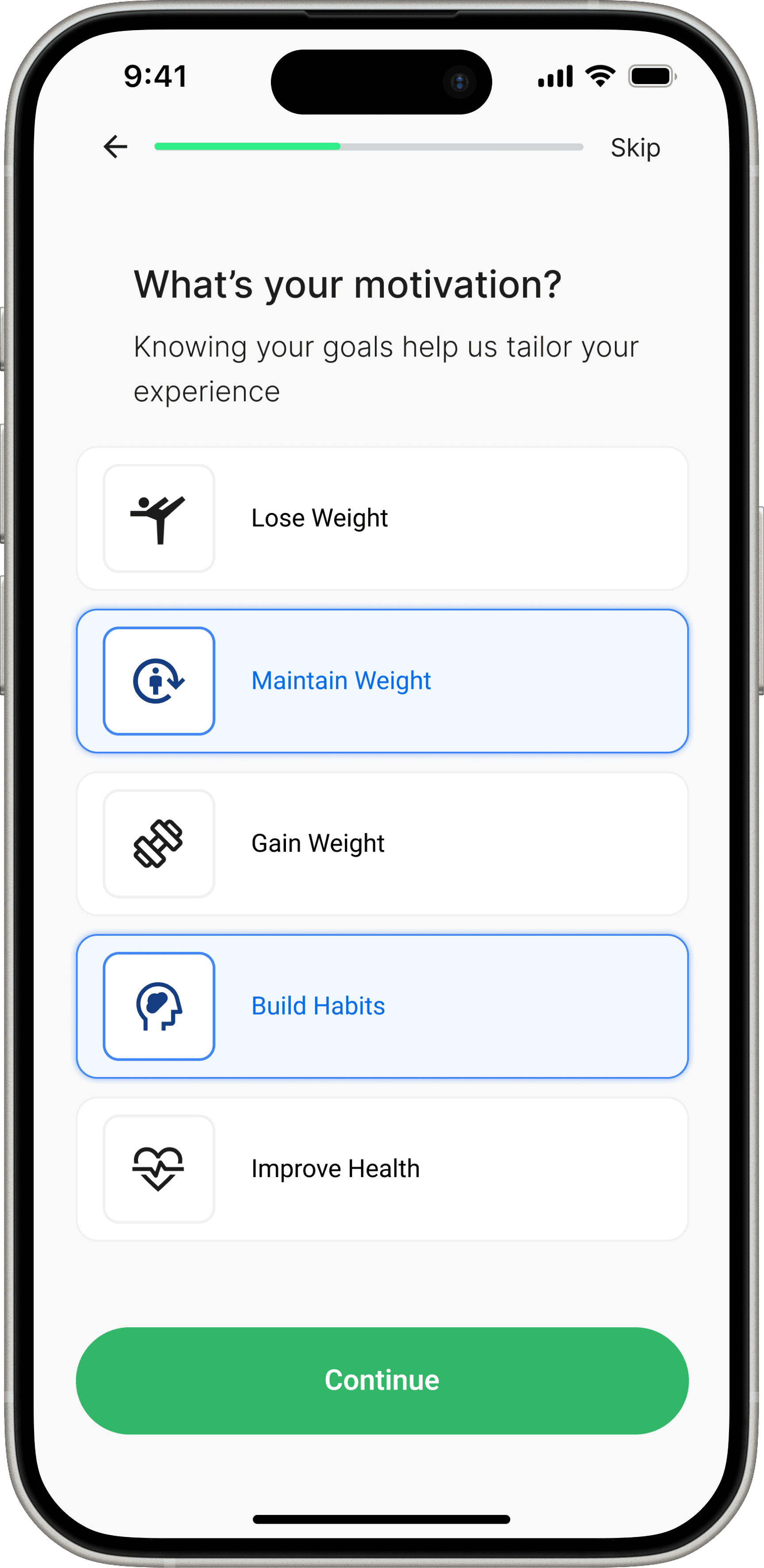
The finished prototype was build and tested in Figma
Validating Hypotheses through testing
We believe that we will achieve higher user retention if professionals who are in a rush can achieve
with smart browsing and recommendation feature.
We believe that we will achieve higher user satisfaction if users who would like to build healthy and
consistent habits can compare their habit changes to previous years with AI chatbot and dashboard.
We believe that we will achieve more premium upgrades if people on a diet with a weight goal can
stay aligned with their calorie or macro targets with premium nutrition insights & advanced logging tools.
We believe that we will achieve greater user advocacy if users with allergens or specific dietary
restrictions can avoid unwanted food recommendations with food and dietary filters.
We believe that we will achieve improved brand position and trusted customers if nutrition-
conscious users who have issues tracking their calories can easily save their calorie intake with auto-tracking and progress indicators.
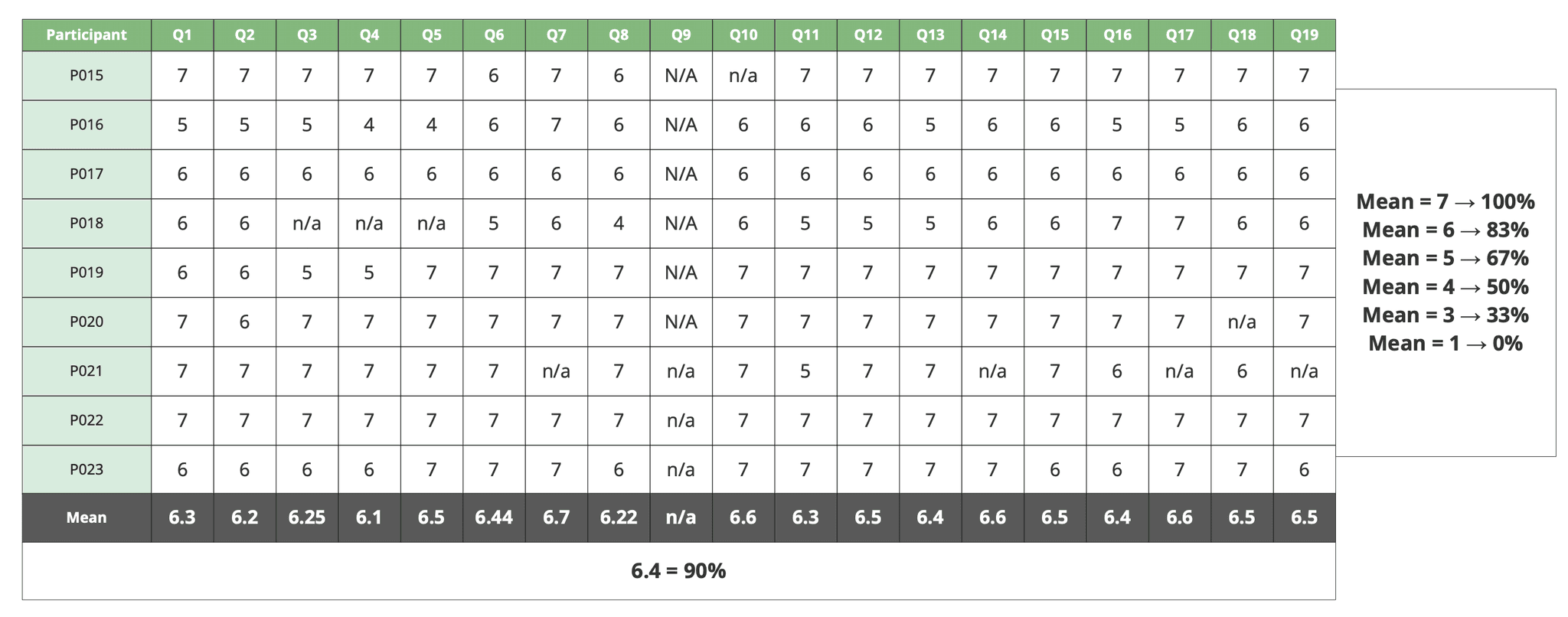
Usability testing measured task time, errors, and assists across key flows like onboarding, AI chat, and meal logging. After iterating based on initial findings and adding new features, the second test achieved an average CSUQ score of 6.4, confirming a 90% usability success rate and validating the project’s hypotheses.
Thanks for stopping by
Let’s connect and talk about collaborations.



Usability Test